
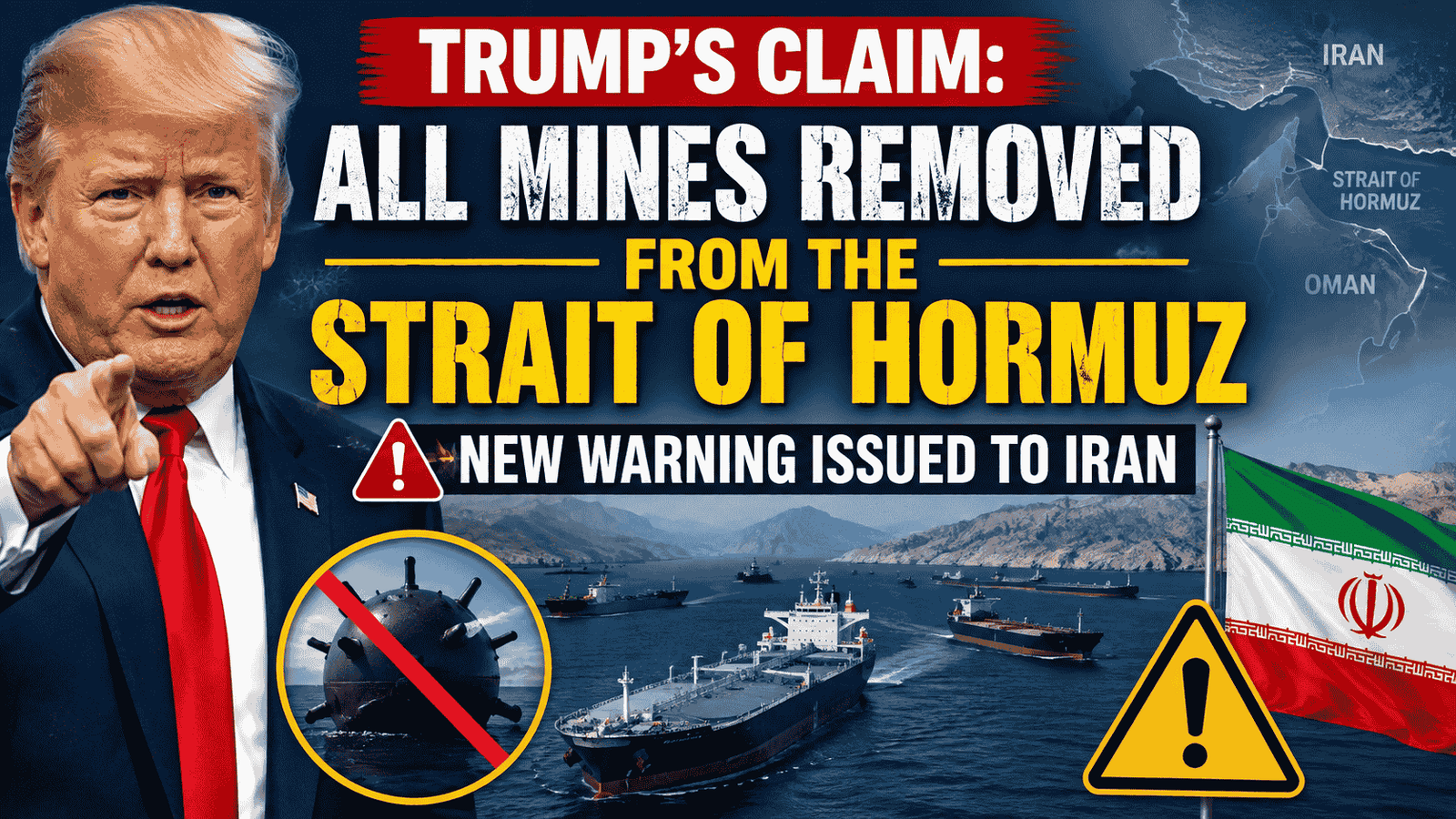
The Strait of Hormuz mines issue has once again captured global attention. Former U.S. President Donald Trump recently claimed that all naval mines placed in the Strait of Hormuz have been completely removed. At the same time, he issued a strong warning to Iran, stating that any attempt to re-lay mines in this vital waterway would lead to serious consequences.
This statement has reignited discussions about maritime security, oil supply risks, and rising tensions in West Asia. Although the claim has not been independently verified, the focus on Strait of Hormuz mines highlights how sensitive this narrow passage remains for the world’s energy markets.
Why the Strait of Hormuz Matters So Much
The Strait of Hormuz is a narrow sea lane connecting the Persian Gulf to the Arabian Sea and the Indian Ocean. It is one of the most important oil transit chokepoints on the planet.

Every day, millions of barrels of crude oil from Saudi Arabia, Iran, Iraq, Kuwait, the United Arab Emirates, and other Gulf nations pass through this route. Experts estimate that nearly 20% of the world’s seaborne oil trade moves through the Strait of Hormuz.
Any disruption caused by Strait of Hormuz mines, military activity, or conflict can quickly push global oil prices higher, increase shipping insurance costs, and create supply chain delays.
Trump’s Claim on Strait of Hormuz Mines
According to Trump, security measures in the strategic waterway have been strengthened and the existing threats from mines have been largely neutralized. He stated that all Strait of Hormuz mines have been cleared, reducing immediate risks to commercial shipping.
However, no independent confirmation from the U.S. military, regional governments, or international monitoring agencies has been made public so far. Despite the lack of verification, the statement has drawn significant attention because of the high stakes involved.
Fresh Warning to Iran
Along with the claim about mine clearance, Trump delivered a direct warning to Iran. He made it clear that any future attempt to plant mines in the Strait of Hormuz would not be tolerated and would result in severe consequences.
This warning comes at a time when political and military tensions between the United States and Iran remain elevated. Analysts note that such strong statements often serve both strategic and political purposes — signaling strength abroad while reinforcing a tough stance on national security at home.

Potential Impact of Strait of Hormuz Mines on Global Markets
The presence or even the threat of Strait of Hormuz mines can create major economic ripple effects:
- Oil price spikes – Markets react quickly to any perceived risk in the Gulf.
- Higher shipping and insurance costs – Vessel operators may demand higher premiums or avoid the route.
- Supply delays – Alternative routes are longer and more expensive.
- Pressure on importing nations – Countries heavily dependent on Gulf oil face increased costs that can eventually reach consumers.
Energy markets already factor in geopolitical risks. Renewed talk of mines in the Strait of Hormuz only adds to existing uncertainty.
Regional Tensions and the Bigger Picture
West Asia continues to experience complex security dynamics. The Strait of Hormuz sits at the center of these tensions. Any military movement, statement, or incident in this area is closely watched by governments, oil traders, and shipping companies worldwide.
Trump’s remarks about Strait of Hormuz mines underline a larger reality: this waterway is not just a shipping lane. It is a critical junction of energy security, military strategy, and global politics.
Also Read This : Trump Strait of Hormuz : President’s Shocking Claim of “NEW U.S. Territory” Sparks Global Debate
What Happens Next?
All eyes are now on Iran’s response and any official statements from the United States or regional powers. If tensions escalate through further statements or actions, concerns over maritime safety and energy supplies could grow.
For now, Trump’s claim that all Strait of Hormuz mines have been removed remains unverified. Yet the discussion itself is a reminder of how vulnerable global oil flows remain to developments in this narrow but vital strait.
View this post on Instagram