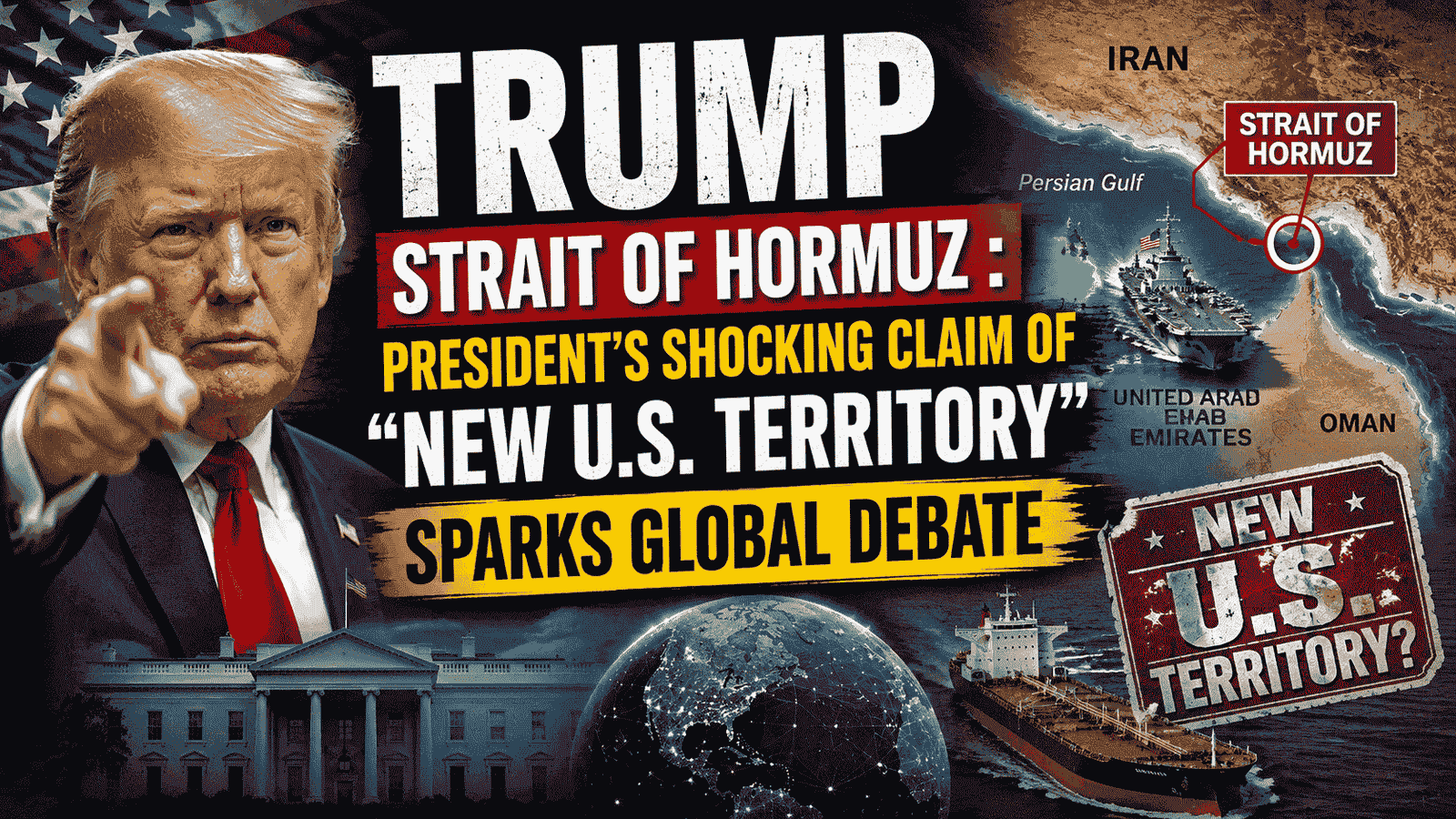
Trump Strait of Hormuz controversy erupts after President Donald Trump posts a map on Truth Social calling the strategic waterway a “NEW U.S. Territory.” Read the full details, implications, and global reactions.
In a surprising move that has captured worldwide attention, Trump Strait of Hormuz became the top trending topic after US President Donald Trump shared a map of the vital waterway on Truth Social and labeled it “NEW U.S. Territory.” The post has triggered intense discussions among diplomats, energy experts, and geopolitical analysts.
What Exactly Did Trump Post About the Strait of Hormuz?
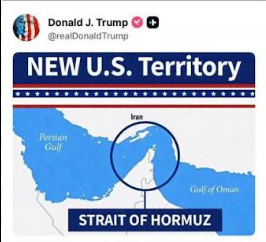
On Tuesday, President Trump uploaded a map of the Strait of Hormuz on his Truth Social account. In the accompanying text, he referred to the narrow sea passage as America’s new territory. This unexpected claim immediately went viral and placed the Trump Strait of Hormuz statement under the global spotlight.
While the post appears symbolic, many observers believe it carries deeper political and strategic messaging, especially given the sensitive nature of the region.

Why the Strait of Hormuz Matters So Much
The Strait of Hormuz sits between Iran and Oman and serves as one of the most critical maritime chokepoints in the world. A significant portion of the world’s crude oil and liquefied natural gas (LNG) passes through this narrow waterway every day.
Any disruption or heightened tension in the Strait of Hormuz can rapidly affect:
- Global oil prices
- Shipping insurance costs
- Energy security for major economies
- International maritime trade routes
This is why the Trump Strait of Hormuz claim is being treated with extreme seriousness by energy markets and governments alike.
Geopolitical Implications of Trump’s Statement
Analysts are divided over the intention behind the post. Some view it as pure political theater, while others see it as a deliberate signal aimed at Iran and other regional players.
Key concerns raised by experts include:
- Potential escalation in US-Iran tensions
- Increased security worries among Gulf countries
- Questions of international law and sovereignty
- Possible impact on regional stability
Under international law, no country can unilaterally claim the Strait of Hormuz as its territory. The waterway remains a vital international passage governed by long-standing maritime norms.
Impact on Energy Markets and Maritime Security
History shows that even minor threats or rhetoric surrounding the Strait of Hormuz can cause oil prices to spike. Shipping companies often raise insurance premiums, and tanker routes face delays whenever tensions rise.
If the Trump Strait of Hormuz narrative gains further traction, markets could react quickly. Energy analysts are already monitoring the situation closely for any signs of real policy changes or military posturing.
What Happens Next?
So far, official reactions from the White House, Gulf nations, and international bodies have been limited. However, the coming days will be crucial. Diplomats and foreign policy experts will watch closely to see whether this remains a social media statement or evolves into something more substantial.

The Trump Strait of Hormuz episode once again highlights how a single post from the US President can reshape global conversations about energy security, maritime freedom, and geopolitical power.
Also Read This : US National debt crosses $40 trillion for the first time; rising liabilities heighten economic concerns
Whether intended as a strategic message or a provocative social media move, President Trump’s claim has successfully put the world’s most important oil transit route back into the spotlight. The Trump Strait of Hormuz story continues to unfold, and its long-term impact on international relations remains to be seen.
What are your thoughts on this development? Do you think this claim will lead to real policy changes or remain limited to social media? Share your views in the comments below.
View this post on Instagram