
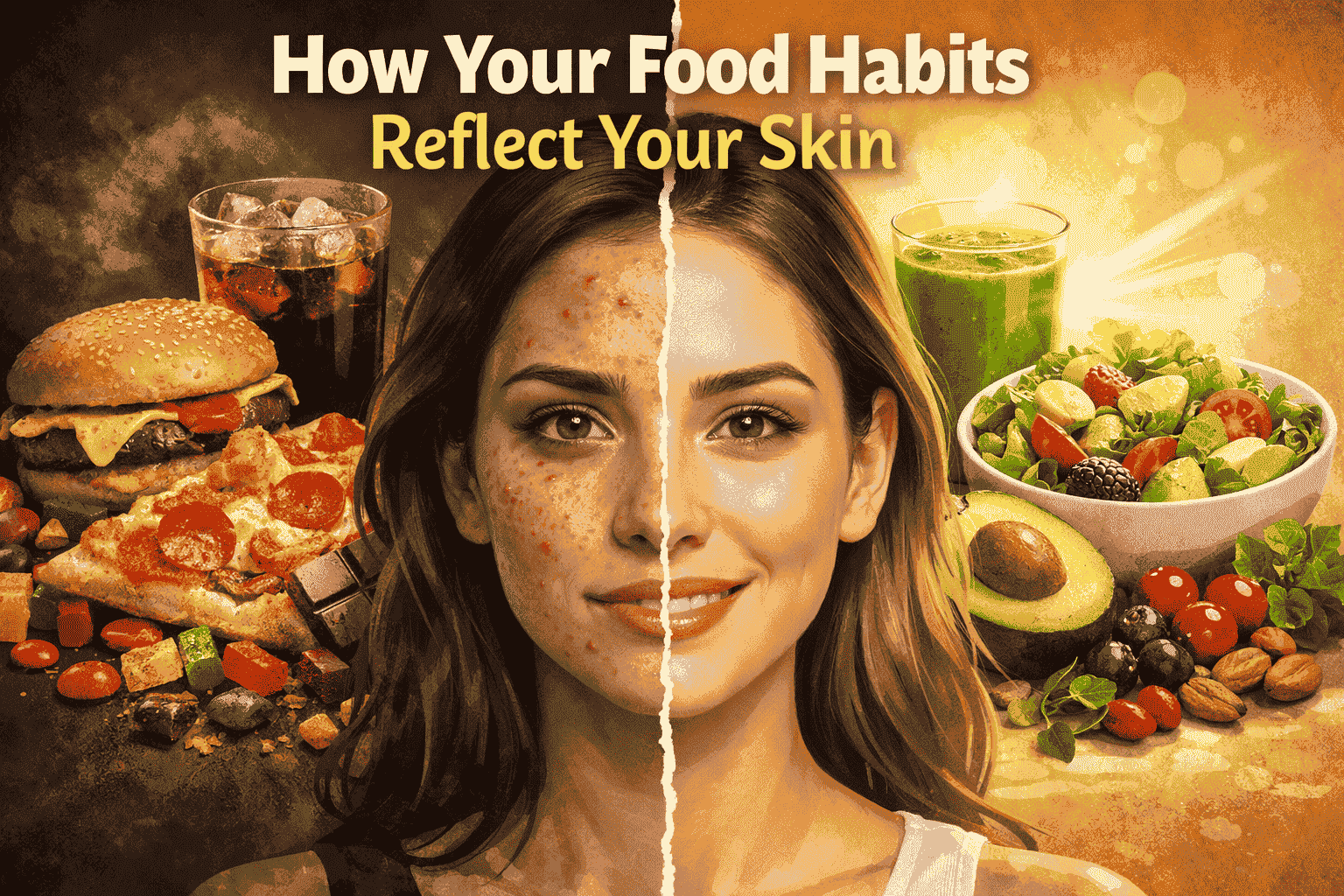
How Your Food Habits Reflect Your Skin : In the world of skincare, we often focus on creams, serums, and routines, but one of the most powerful influences on your skin comes from within: your diet. The saying “you are what you eat” is especially true for skin health. What you consume daily can either nourish your skin for a radiant glow or contribute to breakouts, dullness, inflammation, and premature aging.
Extensive research in nutritional dermatology shows that food habits affect skin through multiple pathways, including hormonal balance, inflammation levels, oxidative stress, collagen production, and the gut-skin axis. Studies published in journals like Nutrients, Journal of the American Academy of Dermatology, and PMC reviews consistently demonstrate that a nutrient-rich diet promotes resilient, clear skin, while poor dietary choices can worsen common concerns.
Understanding How Your Food Habits Reflect Your Skin
Your daily meals send signals throughout your body that directly impact skin cells. High-sugar and processed foods trigger insulin spikes and inflammation, leading to excess oil production and acne. Conversely, antioxidant-rich whole foods protect against free radical damage and support natural repair processes.

This reflection isn’t immediate—it builds over weeks and months—but the changes are visible and measurable. Clinical trials have shown improvements in skin hydration, elasticity, and acne severity when participants switch to low-glycemic, anti-inflammatory diets.
Foods That Promote Radiant, Healthy Skin
Focus on whole, nutrient-dense foods to give your skin the building blocks it needs:
- Colorful fruits and vegetables: Berries, citrus fruits, tomatoes, carrots, spinach, and bell peppers are loaded with vitamins C and A, beta-carotene, and polyphenols. These antioxidants fight oxidative stress and boost collagen synthesis, resulting in firmer, brighter skin.
- Healthy fats: Sources like salmon, walnuts, chia seeds, avocados, and olive oil provide omega-3 fatty acids that strengthen the skin barrier, reduce inflammation, and lock in moisture.
- Whole grains and fiber-rich foods: Oats, quinoa, and legumes help stabilize blood sugar and support gut health, indirectly benefiting skin via the gut-skin connection.
The Mediterranean diet—rich in plants, healthy fats, and lean proteins—stands out in research for its ability to reduce acne, eczema flare-ups, and signs of aging.
Hydration plays a supporting role: Aim for adequate water intake to maintain skin plumpness and aid detoxification.

Dietary Habits That Can Negatively Affect Your Skin
Certain common eating patterns are strongly linked to skin issues:
- High-glycemic foods: Sugary drinks, white bread, pastries, and processed snacks cause rapid blood sugar rises, increasing sebum production and inflammation—a well-documented trigger for acne.
- Dairy products: Especially skim milk and whey-based supplements, which may elevate insulin-like growth factor (IGF-1) and promote breakouts in many individuals.
- Ultra-processed and fried foods: High in refined carbs, trans fats, and additives, these contribute to systemic inflammation and glycation, a process that damages collagen and accelerates wrinkles.
Long-term reliance on these foods can lead to dull complexion, uneven texture, and heightened sensitivity.

The Science Behind the Connection
Robust evidence supports these links. Randomized controlled trials show that low-glycemic diets reduce acne lesions by 20–50% compared to high-glycemic ones. Reviews analyzing dozens of studies confirm that higher fruit and vegetable intake correlates with fewer wrinkles and better skin hydration.
Emerging research on the gut-skin axis highlights how probiotic-rich foods (like yogurt and fermented vegetables) and fiber improve microbiome diversity, calming inflammatory skin conditions.
While genetics and lifestyle factors matter, diet remains a modifiable factor with significant impact.
Practical Steps to Improve Your Skin Through Better Food Habits
How Your Food Habits Reflect Your Skin, Start with simple changes :-
- Replace refined carbs with whole grains and add a serving of colorful produce to every meal.
- Limit added sugars and monitor dairy intake to identify personal triggers.
- Prioritize balanced plates: half vegetables, a quarter protein, a quarter complex carbs, plus healthy fats.

Track your skin’s response over 4–8 weeks. Consistency is key—positive changes often become noticeable within a month.
Also Read This : Toxic : A Fairy Tale for Grown-Ups – Yash’s Explosive Comeback Sets 2026 Ablaze
How Your Food Habits Reflect Your Skin : Your food habits truly reflect your skin’s health. By choosing nourishing, whole foods over processed options, you invest in clearer, more resilient skin from the inside out. For persistent concerns, consult a dermatologist or registered dietitian for personalized guidance. Embrace this approach, and let your healthy choices shine through.