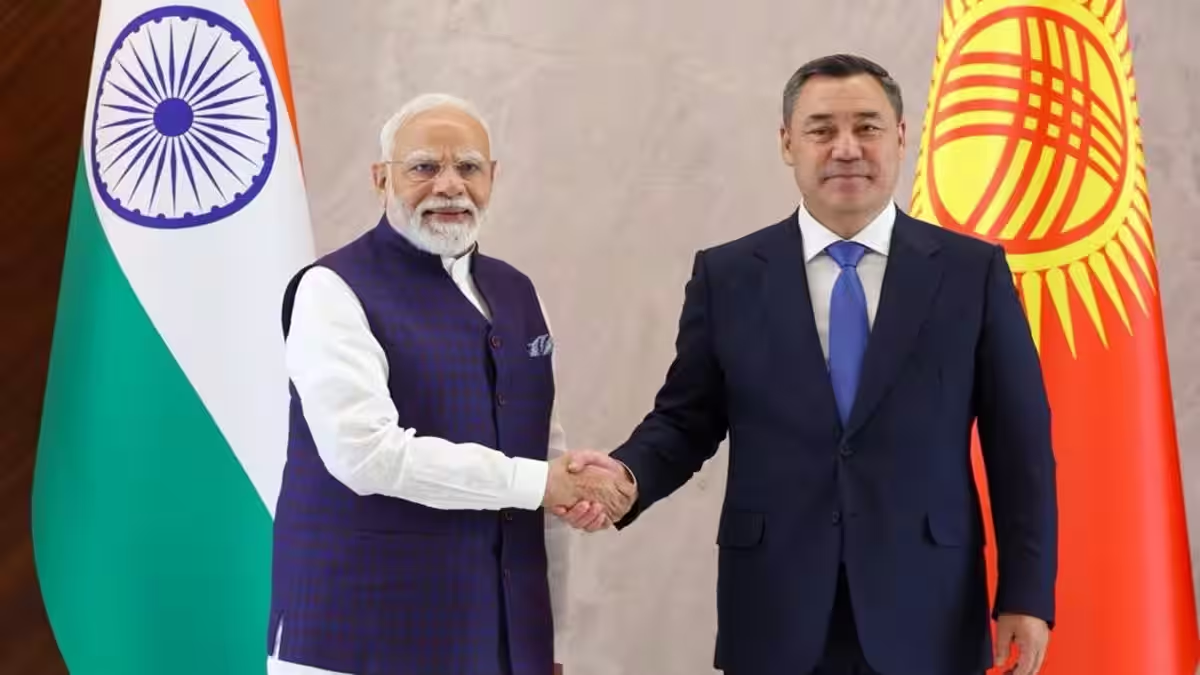
PM Modi’s Kyrgyzstan Visit : PM Modi’s diplomatic activism in Kyrgyzstan is being seen as a major move by India amid changing regional equations. Prime Minister Modi’s visit to Kyrgyzstan is not being viewed merely as a formal state visit, but as an important part of India’s broader foreign policy and regional strategy. The meetings held during this visit with top leaders of Iran, Armenia and Kyrgyzstan indicate that India wants to further strengthen its role in the geopolitical equations of Central Asia and its neighbourhood.
This timing is particularly significant because a new defence agreement between Saudi Arabia, Pakistan and Türkiye has also emerged during the same period. In this context, India’s diplomatic activities are being seen as a balanced and counter-strategy aimed at safeguarding its interests and expanding its influence in the region.
India’s Growing Interest in Central Asia
Central Asia has long been an important region in India’s foreign policy. From the perspective of energy resources, trade routes, security cooperation and connectivity, this region holds strategic importance for India. Strengthening relations with countries like Kyrgyzstan not only makes India more active on regional platforms but also helps in balancing the influence of countries like China and Pakistan.

Among the leaders PM Modi met during his Kyrgyzstan visit, the discussions with representatives of Iran and Armenia are considered especially significant. Iran is an important partner for India in terms of the Chabahar Port and access to Afghanistan, while new dimensions of defence and technological cooperation are opening up with Armenia.
Why Dialogue with Iran and Armenia is Important
India-Iran relations are not limited to bilateral trade alone. Both countries share common interests on issues such as regional connectivity, energy security and the situation in Afghanistan. High-level meetings in this context help India build a strong diplomatic bridge between West Asia and Central Asia.
Meanwhile, India’s cooperation with Armenia has grown rapidly in recent years. The supply of defence equipment, training and strategic dialogue have given this relationship a new direction. The discussions held during PM Modi’s Kyrgyzstan visit signal that India is prioritising its relations with smaller but strategically important countries.
Injecting New Energy into Relations with Kyrgyzstan
Kyrgyzstan is an important partner for India in Central Asia. Cooperation between the two countries has steadily increased in the fields of education, health, defence, trade and cultural exchange. India has always viewed its relationship with Kyrgyzstan as a reliable and long-term partnership.
During this visit, emphasis was placed on further advancing mutual cooperation. At the diplomatic level, the message was also conveyed that India stands for stability, development and multilateral cooperation in Central Asia.
View this post on Instagram
Impact of the Saudi-Pakistan-Türkiye Defence Agreement
The recent defence agreement in regional politics has created new challenges and strategic needs for India. The growing military and political alignment between Saudi Arabia, Pakistan and Türkiye is being viewed as a matter of concern for India. In this situation, India’s increasing dialogue with Iran, Armenia and Central Asian countries is a balancing step.
It is clear that India is no longer merely adopting a reactive policy; rather, it is shaping its diplomacy by taking potential equations into account in advance. PM Modi’s Kyrgyzstan visit can be seen as part of this approach, where India has actively and clearly advanced its interests.
New Confidence in India’s Foreign Policy
Over the past few years, India’s foreign policy has become more active, multi-layered and strategic. India is no longer limited to relations with major countries alone, but is also building deep ties with those countries that can play an important role in regional balance.
PM Modi’s diplomatic activities in Kyrgyzstan are an example of this change. India is now looking at its interests by connecting Central Asia, West Asia and South Asia. This not only strengthens its global image but also opens new opportunities on the fronts of security, energy and trade.
Also Read This : PM Modi Awarded Uzbekistan’s Highest Honour : Key Agreements Reached on Uranium Supply and Strategic Cooperation
The high-level meetings held during the Kyrgyzstan visit indicate that India will further intensify regional diplomacy in the coming times. By increasing cooperation with countries like Iran, Armenia and Kyrgyzstan, India is building a network that will give it greater strength in the changing global scenario.
It is clear that PM Modi’s Kyrgyzstan visit is not just a tour, but part of India’s long-term strategy aimed at increasing influence in Central Asia, creating new partners, and responding to regional challenges.