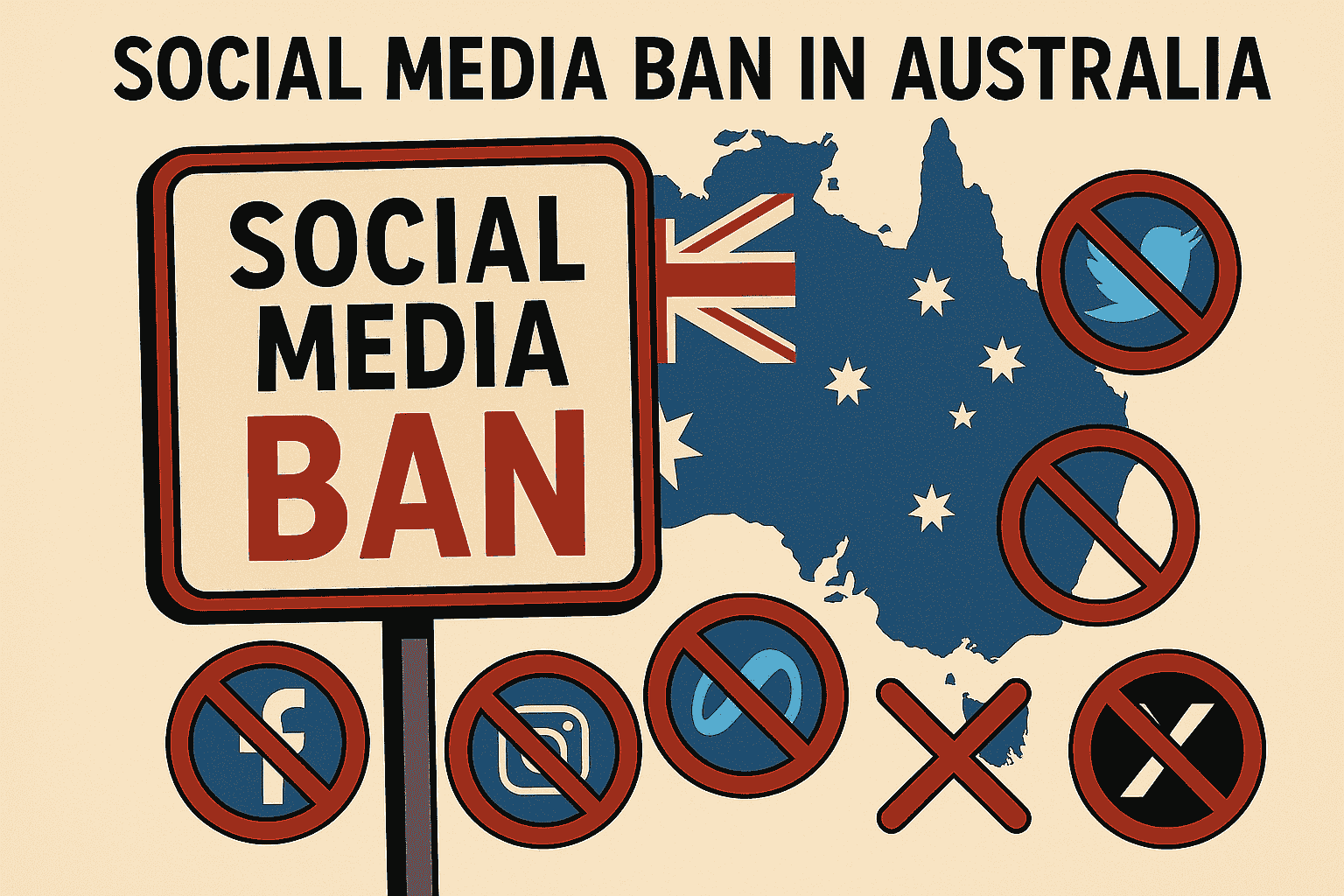
Social Media Ban in Australia : As the clock ticks down to December 10, 2025, Australia stands on the brink of a digital revolution that’s got parents, teens, and tech executives buzzing. In just over a week, the nation’s groundbreaking under-16 social media ban kicks in, forcing platforms like TikTok, Instagram, and Snapchat to lock out young users or cough up fines that could top AUD $50 million. It’s a bold move aimed at reclaiming childhood from the grip of addictive algorithms and endless feeds. But is it a shield for vulnerable minds or a sledgehammer to online freedom? Let’s dive into the details, unpack the drama, and figure out how this could reshape family screen time forever.
Understanding Social Media Ban in Australia
Under-16 Social Media Ban in Australia : At its core, Social Media Ban in Australia, officially the Online Safety Amendment (Social Media Minimum Age) Act 2024. Isn’t about shaming parents or policing kids’ devices. Instead, it flips the script, placing the full weight of responsibility on tech giants. Platforms with more than a million Australian users must now deploy “reasonable steps” to verify ages and block anyone under 16 from signing up or staying logged in. We’re talking advanced tools like AI-powered facial recognition, biometric scans, or even government ID checks to keep the under-16 crowd out.

This isn’t a vague suggestion; it’s enforceable law, overseen by the eSafety Commissioner. If Meta, ByteDance, or Snap fail to comply, they could face those eye-watering penalties—enough to make any CEO sweat. The ban’s roots trace back to mounting evidence of social media’s toll on youth: studies linking it to spikes in anxiety, depression, and cyberbullying, all supercharged by AI that knows exactly how to hook a 14-year-old’s attention. Communications Minister Michelle Rowland put it bluntly during the bill’s passage: “The evidence is overwhelming, social media is inflicting real harm on our children, and it’s time for platforms to act.”
With enforcement starting next week, Meta has already begun testing account deactivations on Instagram and Facebook, flagging profiles based on signup data and usage patterns. Teens caught in the net can appeal with proof of age, but expect a scramble as families adjust.
The Tech and Enforcement Puzzle: How Will It Play Out?
Under-16 Social Media Ban in Australia Picture this: Your 15-year-old tries to log into TikTok, only to hit a wall demanding a selfie for age estimation. That’s the reality platforms are rolling out. Early pilots, like those from UK-based Yoti, use machine learning to guess ages from facial features with about 99% accuracy for most users—but not without hiccups. Reports highlight biases, with higher error rates for Indigenous Australians or people with darker skin tones, sparking calls for urgent tweaks.
Enforcement won’t be flawless. Savvy kids might dust off old VPN tricks or borrow a sibling’s account, and rural families without easy ID access could feel the pinch hardest. Still, the law gives platforms a one-year grace period to iron out kinks, with regular audits to keep everyone honest. Exemptions keep things targeted: private messengers like WhatsApp and non-social apps like Roblox slip through, as long as they’re not masquerading as hangout spots.
Critics, including digital rights advocates from Electronic Frontiers Australia, argue it’s a privacy minefield. Mandatory age checks could mean hoarding sensitive data—facial scans that hackers dream of. Two enterprising Sydney teens are even mounting a court challenge, claiming it stomps on free expression and discriminates against marginalized groups. The Australian Human Rights Commission is weighing in today, with a full hearing eyed for early 2026. It’s messy, but that’s the point: this ban is forcing a reckoning on how we balance innovation with innocence.

Voices from the Frontlines: Cheers, Fears, and Family Realities
Under-16 Social Media Ban in Australia : Supporters see the Australia social media ban as a long-overdue victory. UNICEF Australia hailed it as a “vital step toward safer digital spaces,” while polls show seven in ten parents cheering the extra layer of protection. eSafety Commissioner Julie Inman Grant frames it poetically: “We’re giving kids a fighting chance to thrive offline, where real connections bloom without the buzz of notifications.”
On the flip side, the backlash is fierce and heartfelt. Teens like 15-year-old Mia from Melbourne, who shared with the BBC that Instagram is her “lifeline for mental health chats and LGBTQ+ support,” worry about isolation. In remote areas, where social media doubles as a portal to the world, the ban could widen divides. Tech heavyweights like Meta have grumbled it’s “unworkable” without stronger privacy safeguards, and they’re not wrong—Australia’s patchwork data laws leave gaps that could expose users to breaches.
Yet amid the noise, families are adapting with grit. Parents are dusting off board games, organizing park meetups, and exploring kid-safe alternatives like Duolingo or Khan Academy Kids. One mum in Brisbane told The Guardian: “It’s scary, but it’s forcing us to talk more. My daughter’s already reading a physical book again—miracle!”
A Global Wake-Up Call: Who’s Next?
Under-16 Social Media Ban in Australia : Australia’s gamble isn’t happening in a vacuum. Eyes from London to Washington are locked on Sydney, wondering if this sparks a worldwide wave. The UK’s Online Safety Act is piloting similar age gates, with under-16 restrictions possibly landing by 2026. In the EU, the Digital Services Act demands tougher youth protections, and U.S. states like California are drafting mirror bills amid federal foot-dragging.
If the ban sticks—curbing harms without crumbling under workarounds—it could pressure global platforms to build in age walls from the get-go. Bloomberg dubs it a “world-first blueprint,” one that might just drag Big Tech into the 21st-century ethics conversation.
Also Read This : FIFA World Cup 2026 : The Ultimate Guide to Football’s Biggest Tournament Ever
Unplugging for a Brighter Tomorrow
Social Media Ban in Australia : As December 10 looms, Social Media Ban in Australia feels less like a barrier and more like a bridge—to healthier habits, deeper bonds, and a childhood less defined by likes. It’s imperfect, yes: privacy risks linger, enforcement will stumble, and not every family will cheer. But in an era where AI feeds prey on young vulnerabilities, stepping up feels essential.
Parents, grab esafety’s free guides now—tips on spotting sneaky sign-ups and sparking offline adventures await. Teens, this isn’t the end of connection; it’s a pivot to real-world magic. And to the world watching: Australia’s lighting the fuse. Will you join the spark?


