
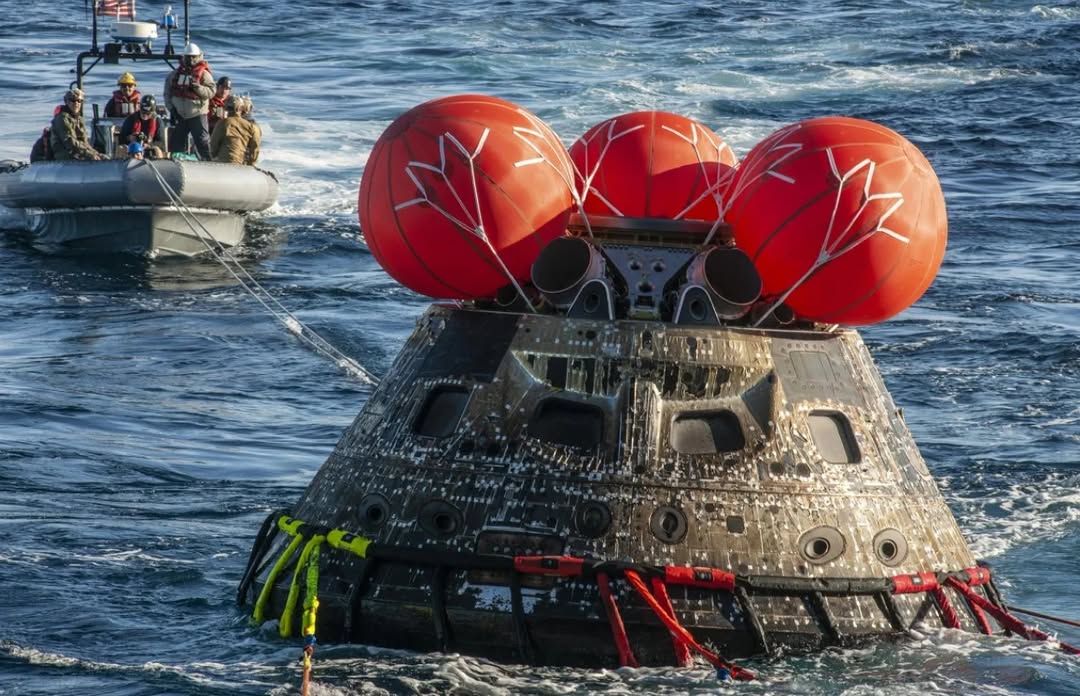
In a landmark moment for space exploration, the NASA Artemis II program took a giant leap forward as the four astronauts of Artemis II safely returned to Earth. On April 10, 2026, the Orion spacecraft nicknamed Integrity splashed down in the Pacific Ocean off the coast of San Diego, California, marking the successful end of humanity’s first crewed lunar mission in over 50 years.
What Was the NASA Artemis II Mission?
The NASA Artemis II mission was the first crewed flight of NASA’s ambitious program aimed at returning humans to the Moon and establishing a long-term presence there. Launched on April 1, 2026, the mission sent four astronauts on a 10-day journey that included a lunar flyby, taking them farther from Earth than any humans have ever traveled — approximately 694,481 miles.
View this post on Instagram
The international crew consisted of:
- NASA astronaut Reid Wiseman (Commander)
- NASA astronaut Victor Glover (Pilot)
- NASA astronaut Christina Koch (Mission Specialist)
- Canadian Space Agency astronaut Jeremy Hansen (Mission Specialist)
During the flight, the team tested critical systems for future NASA Artemis missions, including the Orion spacecraft’s heat shield, life support systems, and navigation during high-speed re-entry.

Dramatic Re-Entry and Text-Book Splashdown
The highlight of the return was the high-stakes atmospheric re-entry. Traveling at nearly 25,000 mph, the Orion capsule endured extreme temperatures reaching about 2,760°C — roughly half the surface temperature of the Sun. After a flawless parachute deployment, the spacecraft made a perfect “textbook” splashdown at 8:07 p.m. EDT (5:07 p.m. PDT) in the Pacific Ocean.
Commander Reid Wiseman radioed back: “What a journey. We are stable. Four green crewmembers.” All astronauts were reported happy and healthy immediately after recovery by Navy teams aboard the USS John P. Murtha.
Why This NASA Artemis Milestone Matters
The successful completion of NASA Artemis II is more than just a return mission — it’s a critical stepping stone. This flight has validated key technologies that will enable Artemis III, the first crewed landing on the lunar surface (targeted for 2028 or later). The long-term goal of the NASA Artemis program is to build a sustainable human presence on the Moon, learn how to live and work in deep space, and ultimately prepare for sending astronauts to Mars.
This mission also highlights strong international collaboration, with Canada playing a key role through astronaut Jeremy Hansen.

What’s Next for NASA Artemis II ?
With Artemis II now complete, NASA is already preparing for more ambitious steps in the NASA Artemis program. Future missions will focus on lunar landings, building the Lunar Gateway station, and developing new spacesuits and landers.
The safe return of the Artemis II crew proves that humanity is ready to venture back to the Moon — and beyond.
Also Read This : Iran US War News : Trump’s Fresh Warning on Iran Deal as Tehran Delegation Heads to Pakistan for Crucial Talks