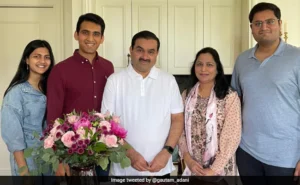

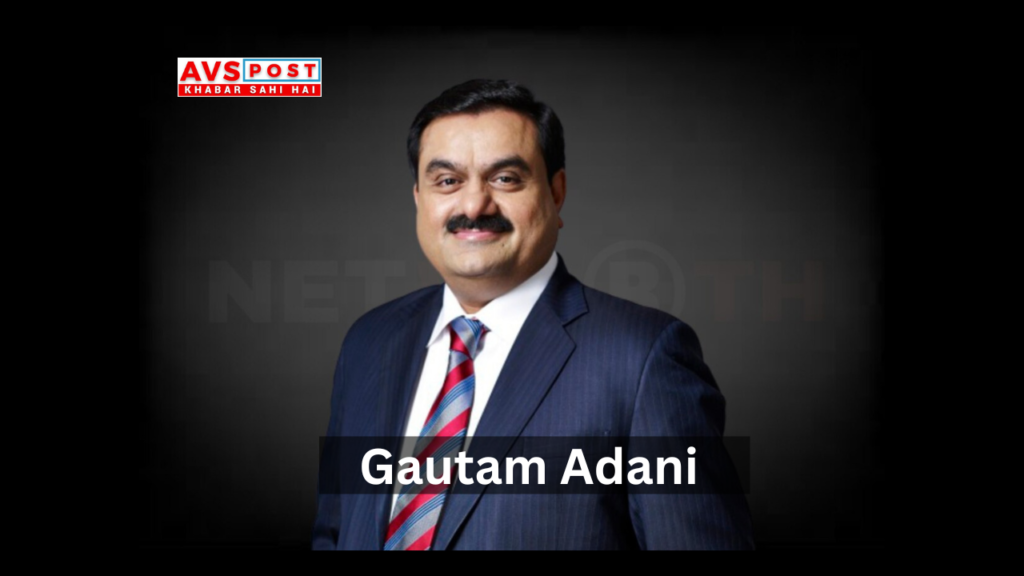
Gautam Adani, born June 24, 1962, in Ahmedabad, Gujarat, India, is a global business titan, steering the Adani Group, a conglomerate spanning ports and beyond, energy, logistics, agribusiness, airports, and media. As of April 2025, he is Asia’s third-richest person and the 24th wealthiest globally, boasting a net worth of $64.3 billion. Gautam Adani’s rise from modest roots to a billionaire titan showcases ambition and strategic genius, yet his journey is equally shaped by controversies that have ignited widespread debate. This biography explores his life, achievements, and the challenges that have shaped his legacy.
Gautam Adani : Early Life and Education
Gautam Adani was born into a Gujarati Jain family, the seventh of eight children to Shantilal, a modest textile merchant, and Shantaben Adani. Raised in Ahmedabad’s Seth ni Pol, a tightly-knit community, the family grappled with financial limitations, fostering Adani’s early drive for independence. He studied at Sheth Chimanlal Nagindas Vidyalaya School, showing an aptitude for commerce. Enrolling in Gujarat University for a commerce degree, he left after his second year, opting for real-world business experience over academic credentials. This bold choice laid the groundwork for his entrepreneurial journey.
Early Career and Rise
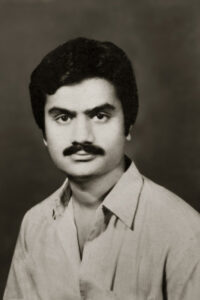
At 16, in 1978, Gautam Adani ventured to Mumbai, India’s commercial epicenter, to seek his fortune. He started as a diamond sorter at Mahendra Brothers, quickly mastering the trade. By 1982, at age 20, he had amassed his first million rupees through diamond trading, a remarkable feat. In 1981, he returned to Ahmedabad to manage his brother Mansukhbhai’s plastics unit, diving into global trade by importing polyvinyl chloride (PVC). This experience honed his understanding of international markets, setting the stage for his future ventures. In 1988, he founded Adani Exports, later Adani Enterprises, focusing on agricultural and power commodities.
Building the Adani Empire
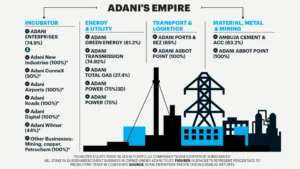
India’s economic liberalization in the 1990s was a game-changer for Adani. He leveraged the open market to expand his trading operations. In 1995, he secured a transformative contract to develop Mundra Port in Gujarat, which grew into India’s largest private port, handling massive cargo volumes. The Adani Group diversified into energy (Adani Power, Adani Green Energy), logistics, airports, and agribusiness, achieving a market capitalization of over $242 billion by 2022. Adani’s acquisition of seven airports, including Mumbai’s international airport, and his push into renewables cemented his role in India’s infrastructure growth.
Controversies and Challenges
Adani’s meteoric rise has been shadowed by controversies.
His apparent ties to Prime Minister Narendra Modi and the Bharatiya Janata Party (BJP) have fueled allegations of cronyism, with detractors challenging the rapid awarding of government contracts.