
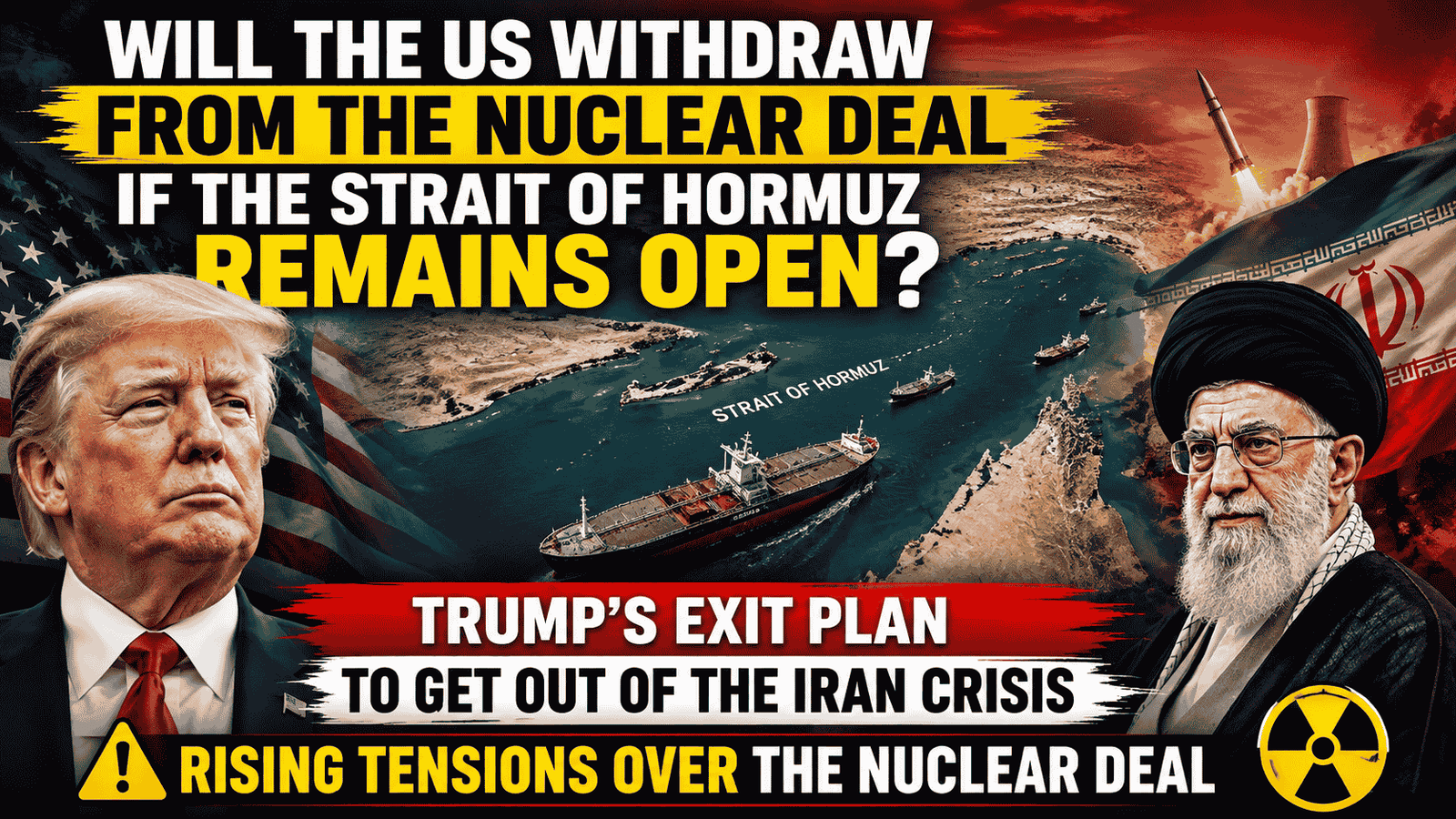
The Strait of Hormuz, focus on America’s strategy. Amid ongoing tensions in the Middle East, the Strait of Hormuz has once again become the centre of global politics and energy security. The growing confrontation between Iran and its adversaries has heightened concerns in international markets. In this context, discussions have intensified about America’s potential strategy: if the situation normalises and the Hormuz route remains open, could Washington move towards withdrawing from the nuclear deal with Iran?
Given Donald Trump’s role in American politics, this question becomes even more significant. The Trump administration’s foreign policy has previously been known for its hardline stance towards Iran. Therefore, the search for an exit plan to emerge from the current crisis is being seen as a strategic signal.
Is America trying to extricate itself from the Iran conflict?
Analysts believe that the US is currently looking for ways to avoid getting directly entangled in a prolonged military confrontation. Escalating tensions with Iran not only increase regional instability but also impact oil supplies, maritime trade and the global economy. For this reason, the security and openness of the Strait of Hormuz have become an international priority.
If this maritime route remains fully open and functional, a new diplomatic situation could arise for the United States. Some experts believe that in such circumstances, Washington may try to revisit the nuclear deal with Iran under tougher conditions in order to maintain pressure on Tehran.

Questions raised again over the nuclear deal
The Iran nuclear deal has long been a subject of global controversy. The agreement’s aim was to keep Iran’s nuclear programme under control, but mutual distrust between the US and Iran repeatedly weakened it. During Trump’s tenure, the United States decided to withdraw from the deal, after which the situation became even more complicated.
Now, with fresh tensions in the region, there are fears that America may adopt a new strategy of diplomatic pressure in exchange for temporary peace or maritime security. If the Strait of Hormuz remains open and oil supplies are not disrupted, it could also send a message that the US intends to redefine economic and political pressure on Iran.
Why is the Strait of Hormuz so important?
The Strait of Hormuz is one of the world’s most sensitive maritime routes. It connects the Persian Gulf to the Gulf of Oman and the Arabian Sea. A large share of the world’s crude oil and gas passes through this route. Any disruption here directly affects international energy prices.
This is why the United States, European countries and several Gulf nations remain highly vigilant about the security of this waterway. Iran also views the strait as a source of strategic leverage, which increases its ability to exert pressure in the event of any confrontation.
Trump’s stance and a possible exit plan
A key aspect of Donald Trump’s foreign policy has been his preference for avoiding long and costly military campaigns. However, his approach towards Iran has often been aggressive. If the United States now wants to avoid getting drawn into a major conflict, preparing an exit plan is considered natural.

This exit plan would not mean merely a military withdrawal, but also the creation of diplomatic and economic arrangements to contain the crisis. These could include maritime security agreements, regional cooperation, and limited yet effective pressure on Iran.
Impact on global markets and diplomacy
Any form of instability in the Middle East is immediately reflected in global markets. Oil prices, shipping costs and investor sentiment are directly affected. If the Strait of Hormuz remains open, markets may experience some relief. But if tensions escalate, an energy crisis and economic uncertainty could deepen.
At the diplomatic level too, America will have to strike a balance. On one hand, it must reassure its allies about security; on the other, it must avoid a confrontation with Iran that could push the entire region towards war. This is why every move by Washington is now being watched with extreme caution.
What could happen next?
In the coming days it will become clear in which direction America wants to take the Iran crisis. If the situation calms down and the maritime route returns to normal, a new political debate over the nuclear deal could intensify. On the other hand, if tensions rise, the US may have to choose between greater toughness or greater flexibility in its strategy.
Also Read This : Iran could strengthIran control Strait of Hormuz : discussions underway about collecting up to 7% toll from commercial ships
For now, one thing is certain: the situation in the Strait of Hormuz is no longer just a regional issue, but has become a decisive point for global energy, diplomacy and security. America’s next move could change this entire equation.
View this post on Instagram


