
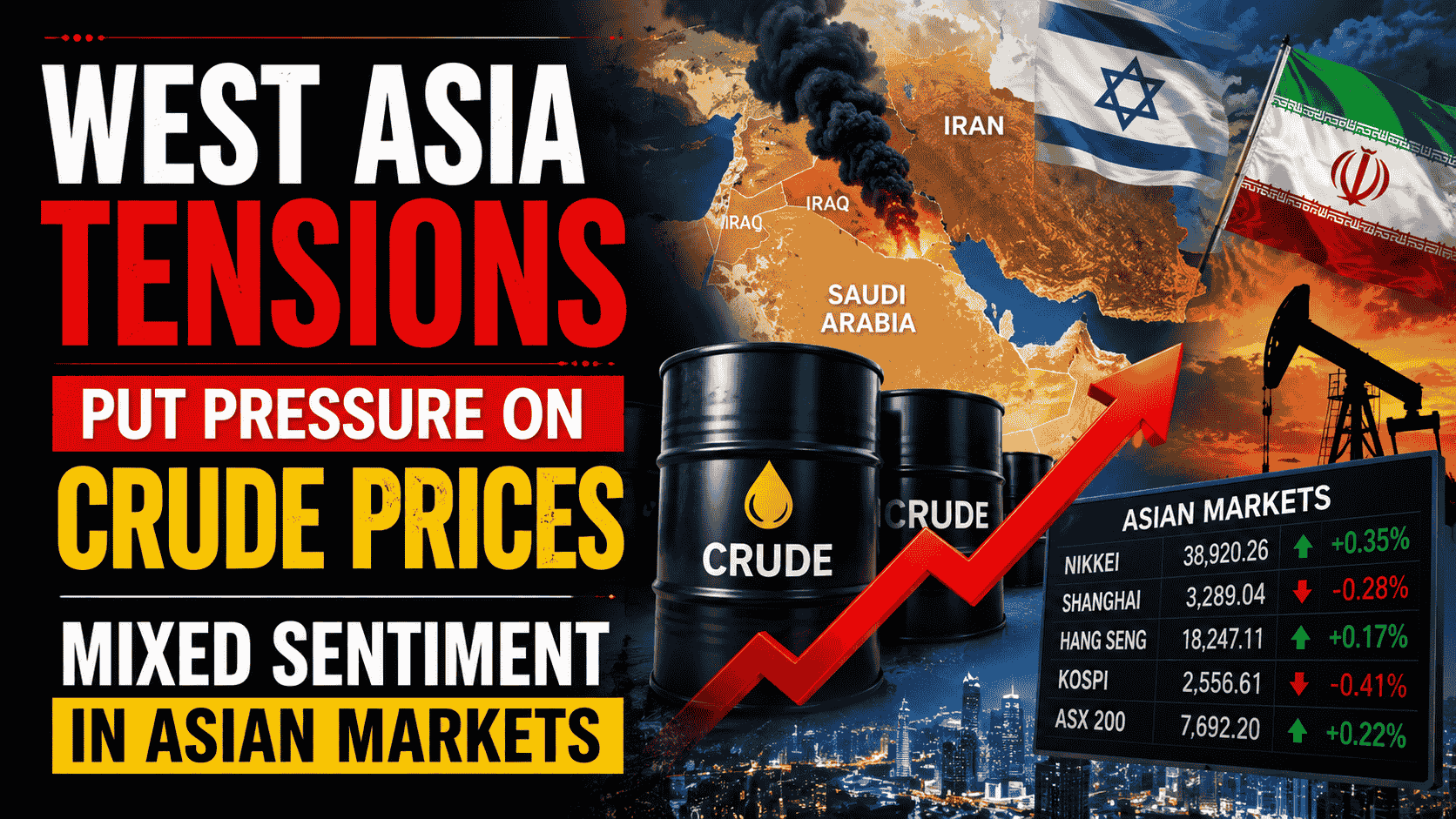
West Asia tensions increase pressure on crude oil prices. Rising conflicts and geopolitical uncertainty in West Asia have intensified volatility in global energy markets. Crude oil prices have once again climbed higher as investors fear potential supply disruptions. The oil market was already closely watching signals related to demand, production, and interest rates, but the regional tensions have added an extra risk premium to prices.
Analysts believe that if the conflict deepens, it could impact sea routes, supply chains, and export activities. This is the reason behind the current strength in crude oil prices. For energy traders, this situation is creating short-term volatility along with medium-term uncertainty.
Why have oil prices risen?
West Asia tensions : The biggest reason for the rise in oil prices is supply risk. West Asia is a key center for global oil supply, and any instability in the region immediately affects international markets. Investors are cautious that if tensions escalate, it could impact production, transportation, and exports.
Additionally, there is an ongoing fear in the market that any pressure on energy infrastructure could limit the availability of crude oil. In such a scenario, traders increase buying in anticipation of future price rises, leading to gains in both spot and futures markets.

Mixed Trends in Asian Markets Tensions
West Asia tensions : Amid the turmoil in the oil market, Asian stock markets showed mixed trading. Several markets faced pressure in the early session, but some recovery was seen later. Tokyo and Seoul markets opened with losses, though they saw some improvement as trading progressed.
On one hand, investors adopted a cautious stance due to geopolitical tensions, while on the other, buying in technology stocks and select sectors provided support to the markets. This situation indicates that global markets are not yet showing a clear directional trend.
Recovery in Tokyo and Seoul After Early Declines
The initial declines in major Asian markets like Tokyo and Seoul were primarily due to weakness in global risk sentiment. Investors typically shift toward safe-haven assets during such times, leading to increased selling in equity markets.
However, as the day progressed, some investors viewed the dip as a buying opportunity. This resulted in partial recovery in both markets. It signals that market participants are still assessing the severity of the situation and are waiting for confirmation of any major trend.

Potential Impact on Global Markets
West Asia tensions : The impact of tensions in West Asia is not limited to oil alone. It can also affect inflation, transportation costs, industrial production, and central bank policies. If crude oil prices remain high for a prolonged period, fuel and logistics costs could rise, potentially increasing inflationary pressure in many countries.
High energy prices also affect consumer spending, which can slow down economic growth. This is why investors are closely monitoring the movement in oil prices.
Impact on Dollar and Bond Markets
West Asia tensions : During such periods, the US dollar can strengthen as global investors move toward safe-haven assets. There is also likely to be increased demand for government bonds. This risk-averse behavior can put pressure on stock markets, especially in economies that are heavily dependent on energy imports.
What are the signals for investors?
Market experts say that investors should remain cautious in the current environment. If crude prices rise further, costs could increase in sectors such as energy, transportation, and chemicals. On the other hand, oil and gas companies may benefit.
In the short term, market direction will primarily depend on developments in West Asia, crude oil supply risks, and global risk sentiment. If tensions ease, oil prices may see some softening. However, if the situation worsens, markets could experience further volatility.
Also Read This : Trump’s Loaded and Locked Statement : What Does It Signal? Why Has It Caused a Stir Amid US-Iran Tensions?
West Asia tensions : The escalating conflict in West Asia has once again demonstrated how quickly geopolitical events can influence global energy markets. The rise in oil prices and the mixed performance in Asian markets are signs of this uncertainty. In the coming days, investors’ attention will remain focused on the direction of the conflict, supply risks, and the reaction of international markets.
View this post on Instagram