
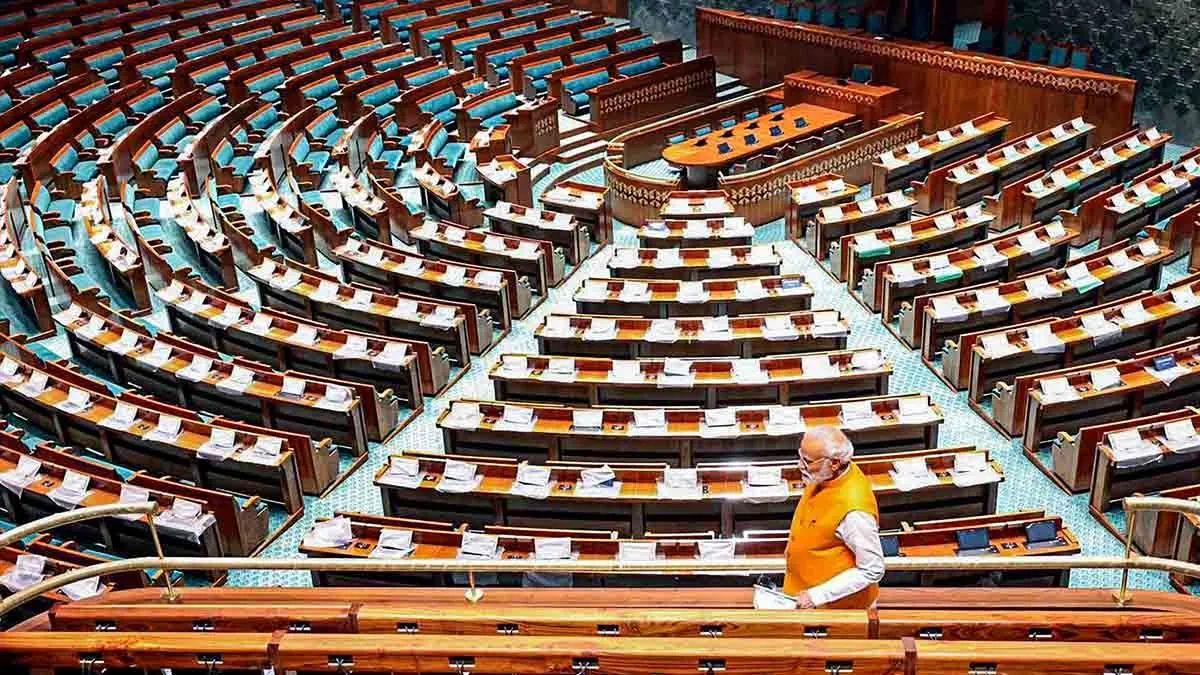
Lok Sabha Expansion : In a landmark move that could reshape India’s parliamentary democracy, the Union Government has introduced the Constitution (One Hundred and Thirty-First Amendment) Bill, 2026, paving the way for a major Lok Sabha expansion. The proposal aims to increase the strength of the lower house from the current 543 elected seats to a maximum of 850 seats — comprising up to 815 from States and 35 from Union Territories.
This Lok Sabha expansion is expected to be tabled during the special Parliament session beginning April 16, 2026. A draft of the bill has already been shared with MPs, signalling the government’s intent to push through this significant electoral reform.
Why is Lok Sabha Expansion Being Proposed?
India’s Lok Sabha seat distribution has remained largely frozen since the 1970s, based on the 1971 Census. This freeze was introduced to encourage family planning and prevent states with better population control from losing representation. However, decades of uneven population growth have created imbalances.
The proposed Lok Sabha expansion seeks to address this by:
- Removing the long-standing constitutional cap under Article 81.
- Enabling fresh delimitation of constituencies based on the latest published census figures (likely starting with 2011 Census data for faster implementation).
- Creating space for the smooth rollout of the 33% women’s reservation (Nari Shakti Vandan Adhiniyam) without reducing any existing seats.

By increasing the total number of seats, the government aims to implement one-third reservation for women in the Lok Sabha and State Assemblies from the 2029 general elections onwards.
Key Highlights of the Lok Sabha Expansion Bill
- New Strength: Maximum 850 members (815 from States + 35 from Union Territories).
- Constitutional Changes: Amendment to Article 81 and Article 82 to allow readjustment of seats and removal of the 1971 Census freeze.
- Delimitation Exercise: A new Delimitation Commission will redraw boundaries and allocate seats, including SC/ST reservations and women-reserved constituencies.
- Women’s Quota Link: The Lok Sabha expansion is strategically designed to accommodate the 33% women’s reservation seamlessly, with rotation of reserved seats.
State Legislative Assemblies are also expected to see a proportional increase in seats, though the upper limit for assemblies remains unchanged in the current proposal.
Political Reactions and Concerns
The Lok Sabha expansion has sparked intense debate across political lines. Northern states like Uttar Pradesh and Bihar, which have witnessed higher population growth, are likely to gain more seats in absolute terms. Southern states, known for successful family planning and slower population growth, fear a decline in their relative influence.
Opposition parties, including those from southern states (such as DMK), Congress, and others, have expressed concerns about federal balance. Many argue that delimitation should ideally be based on the upcoming post-2026 Census rather than earlier data. There are also demands for safeguards to protect the representation and resource allocation of developed states.

What Does This Mean for Indian Democracy?
This Lok Sabha expansion is one of the most ambitious electoral reforms in recent decades. Proponents argue it will:
- Ensure better representation in line with current demographics.
- Strengthen women’s participation in law-making.
- Modernize India’s parliamentary structure after nearly 50 years.
Critics, however, worry about potential north-south divides, increased costs of larger legislatures, and the risk of political gerrymandering during the delimitation process.
The bill requires a special majority in both houses of Parliament for passage. If cleared, it could fundamentally change the composition of the next Lok Sabha after 2029.
The proposed Lok Sabha expansion to 850 seats marks a bold step towards making India’s Parliament more representative and inclusive. While it promises to fast-track women’s reservation and update seat distribution, it also opens up critical discussions on federal equity and democratic balance.
Also Read This : Bihar New CM Samrat Choudhary
As the special Parliament session unfolds from April 16, 2026, all eyes will be on how lawmakers navigate this delicate yet transformative reform.
View this post on Instagram