The India: Details on history, independence 1947, geography, cultural and other details about the country.
The India: India is the seventh-largest country in the world. It is a land of vibrant cultures, rich history, and breathtaking landscapes. It is known as the birthplace of ancient civilizations and more. It is a country where tradition and modernity coexist harmoniously. It has snow-capped Himalayas in the north to the serene beaches in the […]
AVS POST Bureau
Published: Tuesday, 1 April 2025 | 10:36 PM
Reading Time: 8 min read
Share:
The India: India is the seventh-largest country in the world. It is a land of vibrant cultures, rich history, and breathtaking landscapes. It is known as the birthplace of ancient civilizations and more. It is a country where tradition and modernity coexist harmoniously. It has snow-capped Himalayas in the north to the serene beaches in the south, every corner of it has something unique to offer.
It is home to more than 1.4 billion people, speaking over 1,600 languages and dialects. The country celebrates a variety of festivals, including Diwali, Holi, Eid, Christmas, Navratri, and Pongal, each showcasing the diversity of its people. There is also influence of different religions, including Hinduism, Islam, Sikhism, Buddhism, and Christianity.
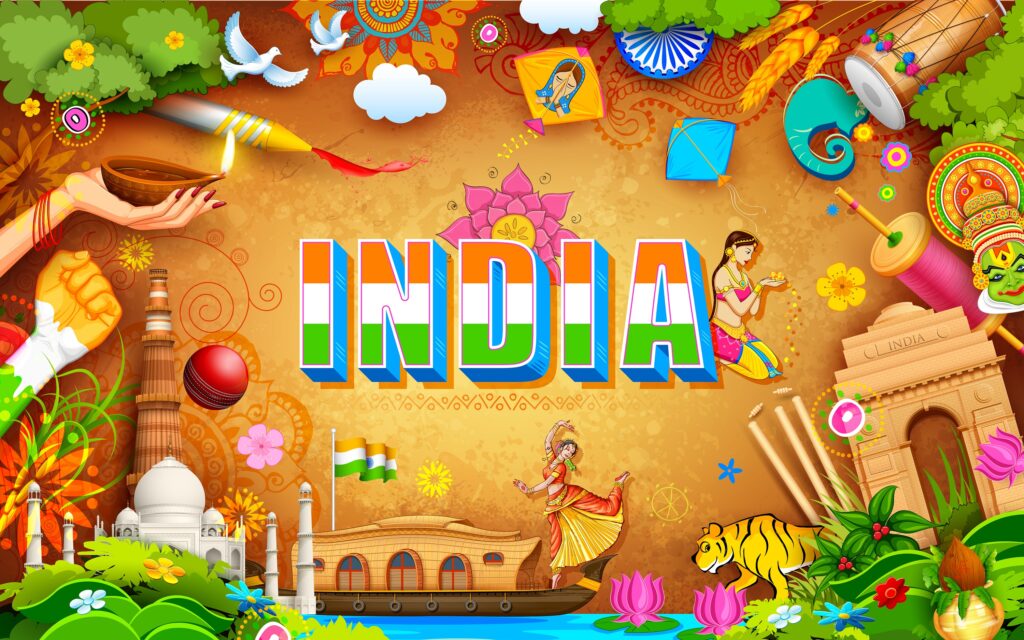
The India
These has shaped Indian traditions and way of life. It is more than just a country, it is an unique experience for all whether you are a history buff, a foodie, a traveler, or a tech enthusiast. It has something for everyone, with its rich traditions, rapid modernization, and warm hospitality, India continues to inspire and captivate people from all around the world.
How did the India went from King rules to Democracy?
The country’s monarchy-based rule to a democratic republic was a long and complex journey, influenced by various historical events, foreign invasions, and independence movements.
This includes the following:
Ancient & Medieval India (Before 1757), which is The Era of Kings and Empires this includes-
From 1500 BCE – 600 BCE: Early Vedic Period.
From 600 BCE – 321 BCE: Rise of powerful Mahajan padas and some were monarchies like Magadha, Kosala.
From 200 BCE – 1200 CE: dynasties ruled different regions by– Guptas, Cholas, Rashtrakutas, Rajput’s, etc.
From 1206 – 1526: Delhi Sultanate – Various Turkic and Afghan rulers governed North India.
From 1526 – 1857: Mughal Empire – A mix of monarchy and administrative governance with regional autonomy in some places.
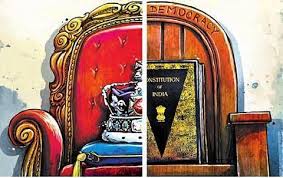
King rules to Democracy
The Colonial Rule (1757 – 1947) – British Takeover and the Freedom Struggle
In 1757, British East India Company won the Battle of Plassey, marking the start of colonial rule.
In 1857: The First War of Independence (Revolt of 1857) was crushed; British Crown took direct control, ending Mughal rule.
In 1885, Indian National Congress (INC) was formed to demand self-governance.
In 1905, Partition of Bengal led to protests and rise of revolutionary movements.
In 1919, Jallianwala Bagh Massacre increased demand for complete independence.
In 1930, Mahatma Gandhi led the Salt March, symbolizing civil disobedience.
In 1942, Quit India Movement called for an end to British rule.
In 1947, India gained independence on August 15, marking the end of British rule.
Then came the Formation of Democracy (1947 – 1950) and the Birth of the Republic India.
Modem democracy (1991-till now).
Details on the India area and boundaries and other information.
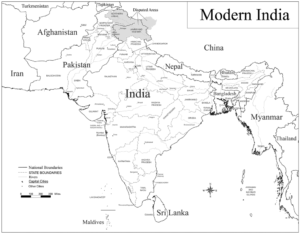
The country Area has a Total Area 3.287 million square kilometers and The country also has a coastline of approximately 7,500 kilometers. It is the 7th largest country in the world by area. Apart from this it shares borders with 7 countries which includes: Pakistan, China, Nepal, Bhutan, Bangladesh, Myanmar and Sri Lanka. It has a vast area, diverse states, and neighboring countries, plays a pivotal role in regional and global affairs. Its strategic borders and its rich cultural heritage contribute to its significance on the world stage.
India’s area and boundaries
It has around 28 states and 8 union territories. The List of States includes: Andhra Pradesh, Arunachal Pradesh, Assam, Bihar, Chhattisgarh, Goa, Gujarat, Haryana, Himachal Pradesh, Jharkhand, Karnataka, Kerala, Madhya Pradesh, Maharashtra, Manipur, Meghalaya, Mizoram, Nagaland, Odisha, Punjab, Rajasthan, Sikkim, Tamil Nadu, Telangana, Tripura, Uttar Pradesh, Uttarakhand, and West Bengal. Whereas, The List of Union Territories includes: Andaman and Nicobar Islands, Chandigarh, Dadra and Nagar Haveli and Daman and Diu, Lakshadweep, Delhi, Puducherry, Jammu and Kashmir, and Ladakh
Why is it a diverse country and details on the cultural and heritage of India.
It is considered one of the most diverse countries in the world due to its vast geographical, cultural, linguistic, religious, and historical variations. It has 22 official languages and over 1,600 dialects spoken across the country. Whereas some states have their own dominant language also. Apart from this English is widely spoken, especially in education and business.
the cultural and heritage of The India
India’s landscape varies drastically from snow-capped mountains to vast deserts, dense forests, fertile plains, and tropical beaches. It has Himalayas in North, Thar Desert in West, Indo-Gangetic Plains in North and Central, Western and Eastern Ghats in South and fauna. It also has Coastline and Islands ( it has Long coastline with Andaman & Nicobar and Lakshadweep islands).
NOIDA : Assistant Commissioner of Police Sanchit Sharma, currently posted in Circle-3 of the Gautam Buddha Nagar Police Commissionerate, has become a familiar name in the district’s policing framework since taking charge in late August 2026. For the 2023-batch IPS officer, the journey from a farming household in Madhya Pradesh to a territorial command in […]
It has a 5,000-year-old civilization influenced by various dynasties, empires, and colonial powers. Its cultural diversity is reflected in its Traditional Clothing like Sarees, dhotis, lungis, lehengas, and western attire; it celebrate various Festivals like Diwali, Eid, Christmas, Gurpurab, Navroz, Bihu, Pongal, Durga Puja (Bengali) and more. It also has various Art and Music form like Bharatanatyam, Kathak, Odissi, and folk traditions like Bhangra and Garba.
What are the famous cuisine of the India?
In India every region in India has its own unique food culture these include:
The North Indian Cuisine, which is famous for Butter chicken, naan, chole bhature, biryani.
The South Indian Cuisine, which includes Dosa, idli, sambar, coconut-based curries.
The East Indian Cuisine, which has food like Fish curry, rasgulla, momos.
The West Indian Cuisine, which has Dhokla, pav bhaji, Goan seafood.
There are more cuisines depending on the religion and state.
famous cuisine
Details on the economic and technology of the India.
The India is one of the fastest-growing economies. Which is ranking at 5th globally with a $3.7 trillion GDP. The economy thrives on agriculture, manufacturing, and services, with IT, pharmaceuticals, and fintech playing a major role. The Government initiatives like Make in India, Digital India, and Startup India are boosting it’s growth.
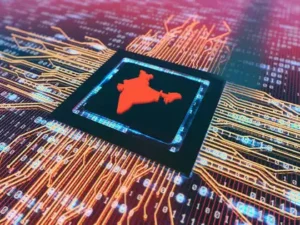
the economic and technology of The India
Whereas in technology, it leads in IT services and has achieved major space milestones, including Chandrayaan-3 and Mangalyaan. The country is rapidly advancing in AI, robotics, fintech, and electric vehicles, with a growing focus on renewable energy. It has a strong digital infrastructure and innovation. It is set to become a global tech and economic powerhouse in future.
The Tourism in India.
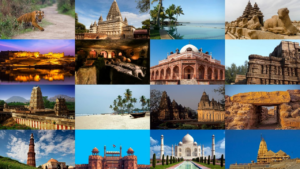
It is the major travel destinations of the world. Which is known for its rich history, diverse landscapes, cultural heritage, and spiritual sites. The tourism sector contributes nearly 10% to India’s GDP and attracts millions of visitors every year. It has 40 UNESCO World Heritage Sites and the Taj Mahal, which is one of the Seven Wonders of the World.
The UGC-NET June 2026 examination conducted by the National Testing Agency (NTA) has once again come under controversy. Following serious errors found in the question papers of English, Commerce and Sociology, a decision has been taken to re-conduct these papers. This decision is likely to directly impact lakhs of candidates who had been waiting for […]
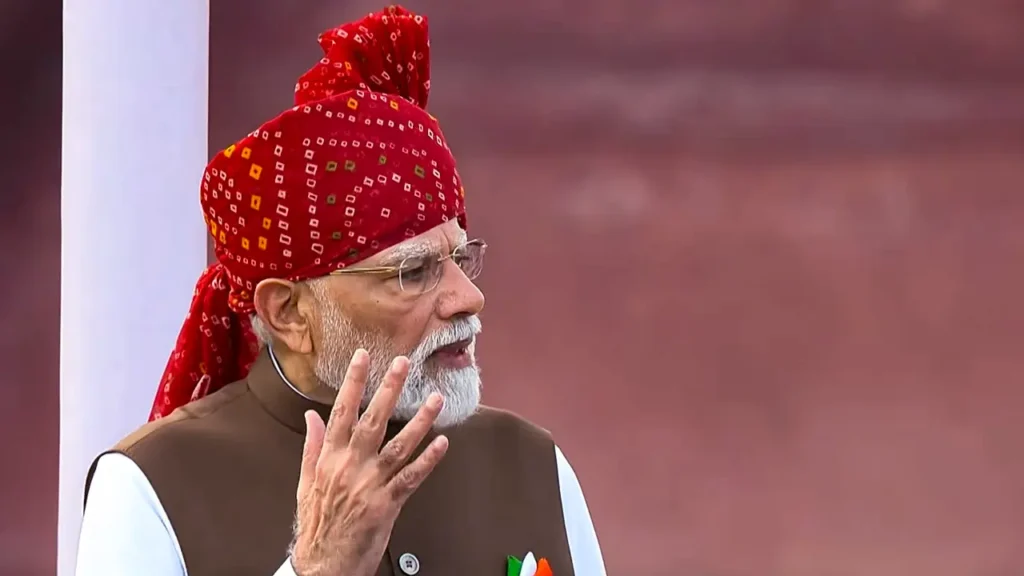
India proudly celebrated its 80th Independence Day on 15 August 2026 with unmatched patriotic fervour across the nation. The historic Red Fort in New Delhi once again became the centre of national pride as Prime Minister Narendra Modi unfurled the Tricolour and addressed the country, marking not only 80 years of independence but also 150 […]
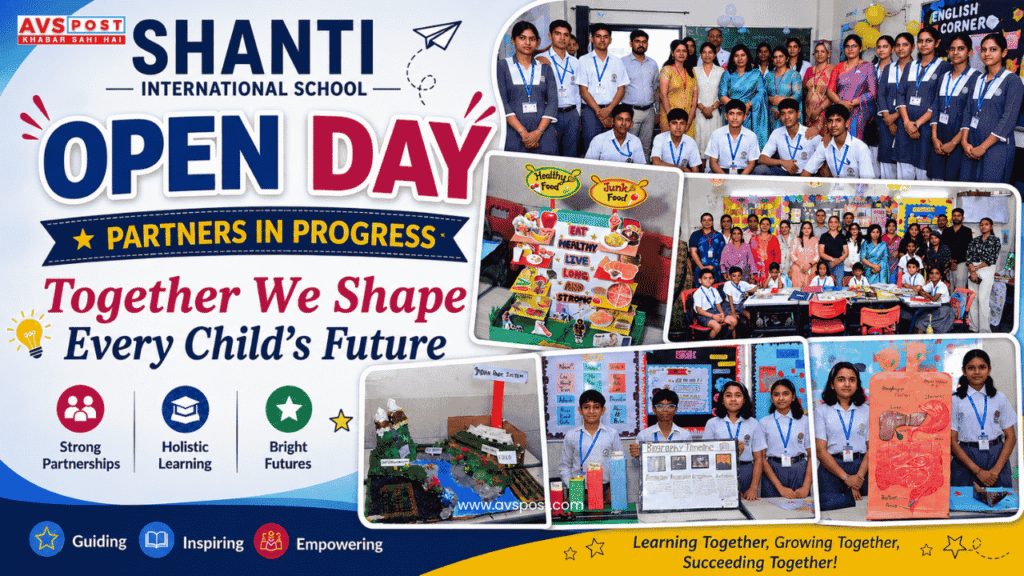
Open Day at Shanti International School : On 25 July, Shanti International School came alive with colour, creativity, and collaboration as it successfully hosted its Open Day under the meaningful theme “Partners in Progress: Together We Shape Every Child’s Future.” Under the able guidance of Principal Ms. Sadhvi Verma, the event beautifully combined the UT-2 […]
Nimmi Chaudhary
2 August 20264 min read
Education
Union Budget 2026 highlights : Key announcements from FM Nirmala Sitharaman