

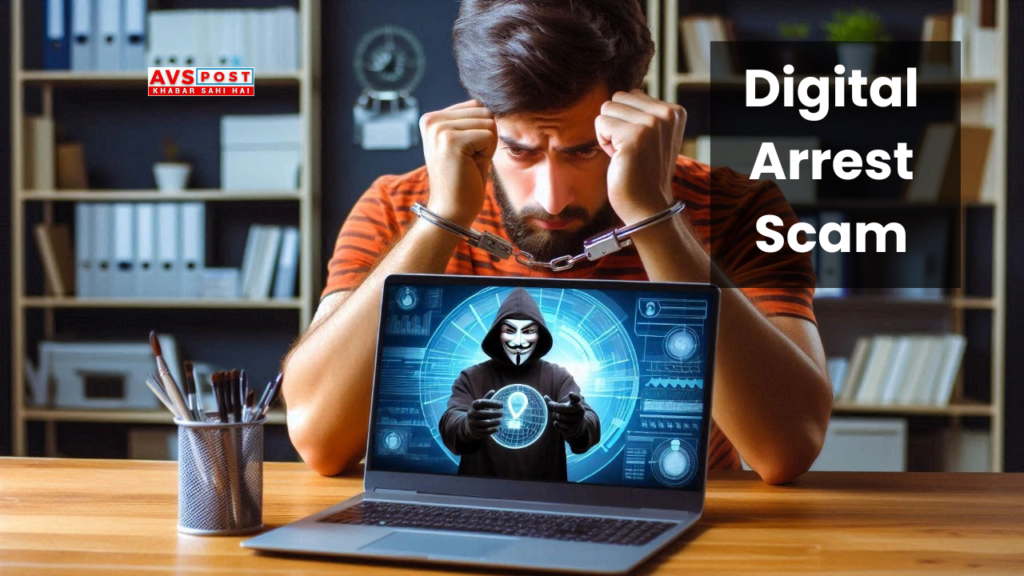
Digital Arrest Scam : Scammers try to convince victims that they are under investigation for a serious crime or that they face immediate arrest. The core strategy of this fraud is to exploit fear, create a sense of urgency, and take advantage of people’s trust in government authorities to trap them in their scheme.
How Does a Digital Arrest Scam Work?
Such scams operate in a well-planned manner, designed to completely confuse and scare the victim.
1. Initial Contact
- Scammers reach out through phone calls, text messages, emails, or messaging apps like WhatsApp and Skype.
- They use caller ID spoofing or official-looking email addresses, impersonating agencies such as the police, CBI, or other regulatory bodies.

2. False Accusations
- Victims are accused of crimes like money laundering, drug trafficking, tax evasion, or being linked to banned substances in a parcel.
- Sometimes, they claim that a SIM card used in a crime is registered in the victim’s name.
3. Intimidation Tactics
- Scammers threaten immediate arrest or legal action.
- In some cases, victims are forced to remain on a video call (e.g., Skype), making them feel like they are under “digital detention.”
4. Fake Documents & Evidence
- Fraudsters present fake arrest warrants, court orders, or other official notices.
- Some even set up fake police station or courtroom environments to appear credible.
5. Demand for Payment or Personal Information
- Victims are asked to transfer money via cryptocurrency, gift cards, or UPI to “settle” the case.
- Scammers may also try to steal sensitive information like bank details, Aadhaar, or PAN numbers.
6. Disappearance
- Once they receive the money or information, scammers suddenly cut off communication, leaving the victim with financial loss and distress.

Key Characteristics of Digital Arrest Scams
Impersonation of Authority – Scammers pretend to be police officers, judges, or government officials.
Use of Technology – Video calls, spoofed phone numbers, AI tools (e.g., voice modulation, deepfakes) are used.
Pressure to Act Quickly – Victims are forced to make immediate payments or share information.
No Legal Basis – No country in the world has a provision for “digital arrest.”
Who Can Be Targeted?
General Public – People unfamiliar with legal procedures are easy targets.
Educated Professionals – Doctors, engineers, professors, and executives can also fall victim due to scammers’ convincing approach.
Elderly Individuals – Older people, who may be less tech-savvy, are often targeted.
High-Profile Individuals – Business leaders and celebrities may be targeted for larger sums of money.
Impact of Digital Arrest Scams
Financial Loss – Victims have lost millions, with reported frauds exceeding ₹120 crore in India in early 2024.
Emotional Distress – Fear of arrest can cause anxiety and stress.
Identity Theft – Stolen information may be misused for further fraud.
Loss of Trust in Authorities – These scams weaken public confidence in law enforcement and government agencies.